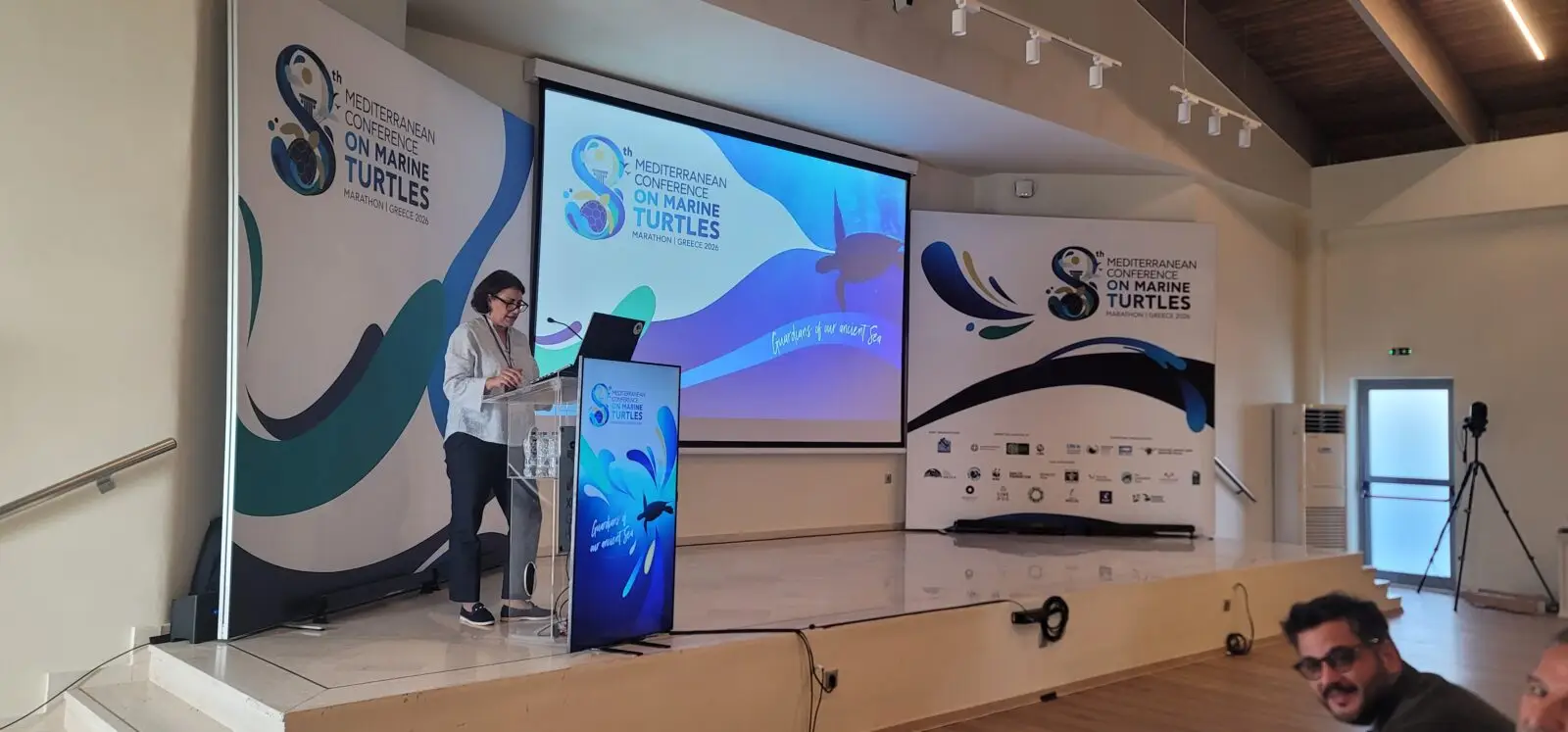
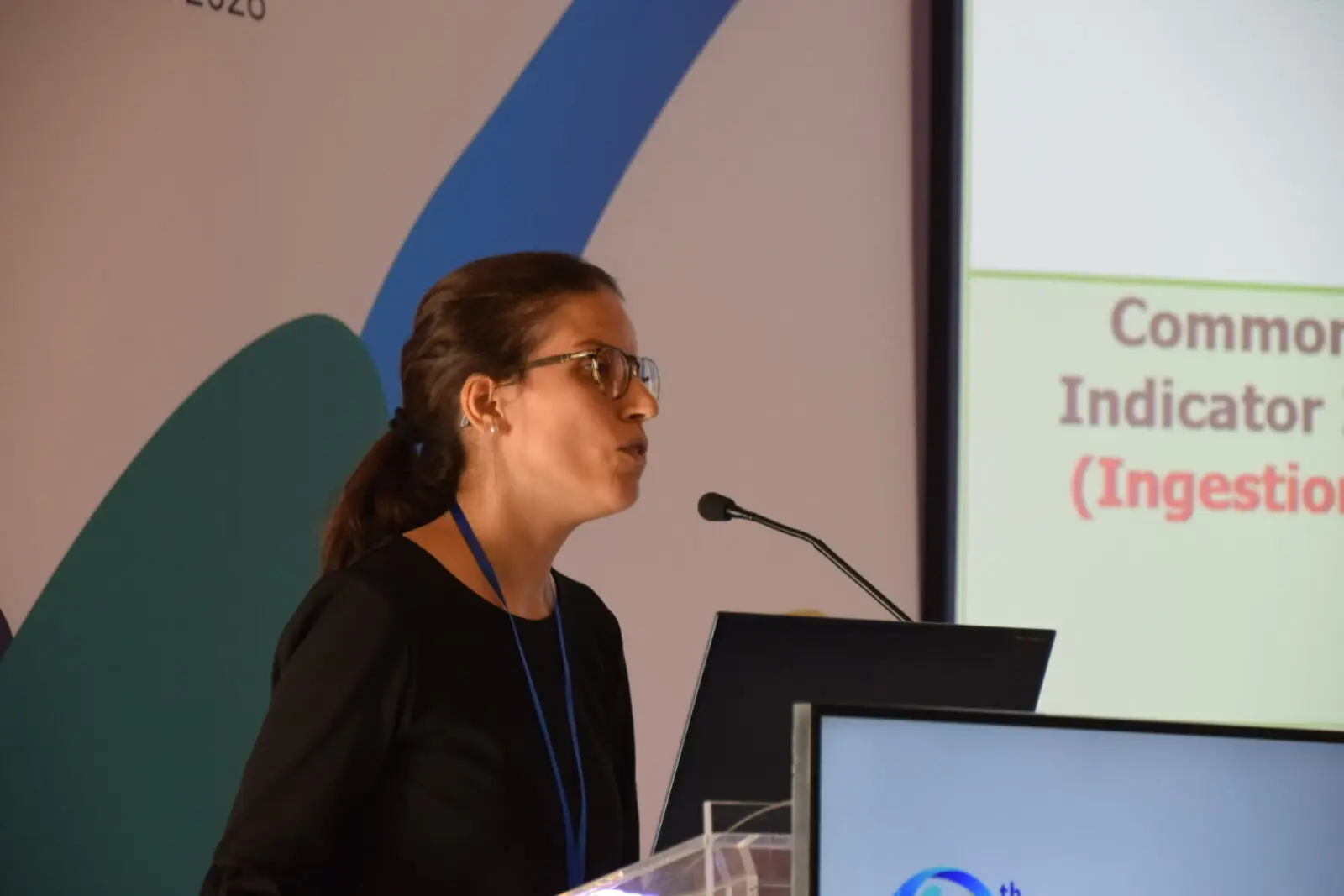
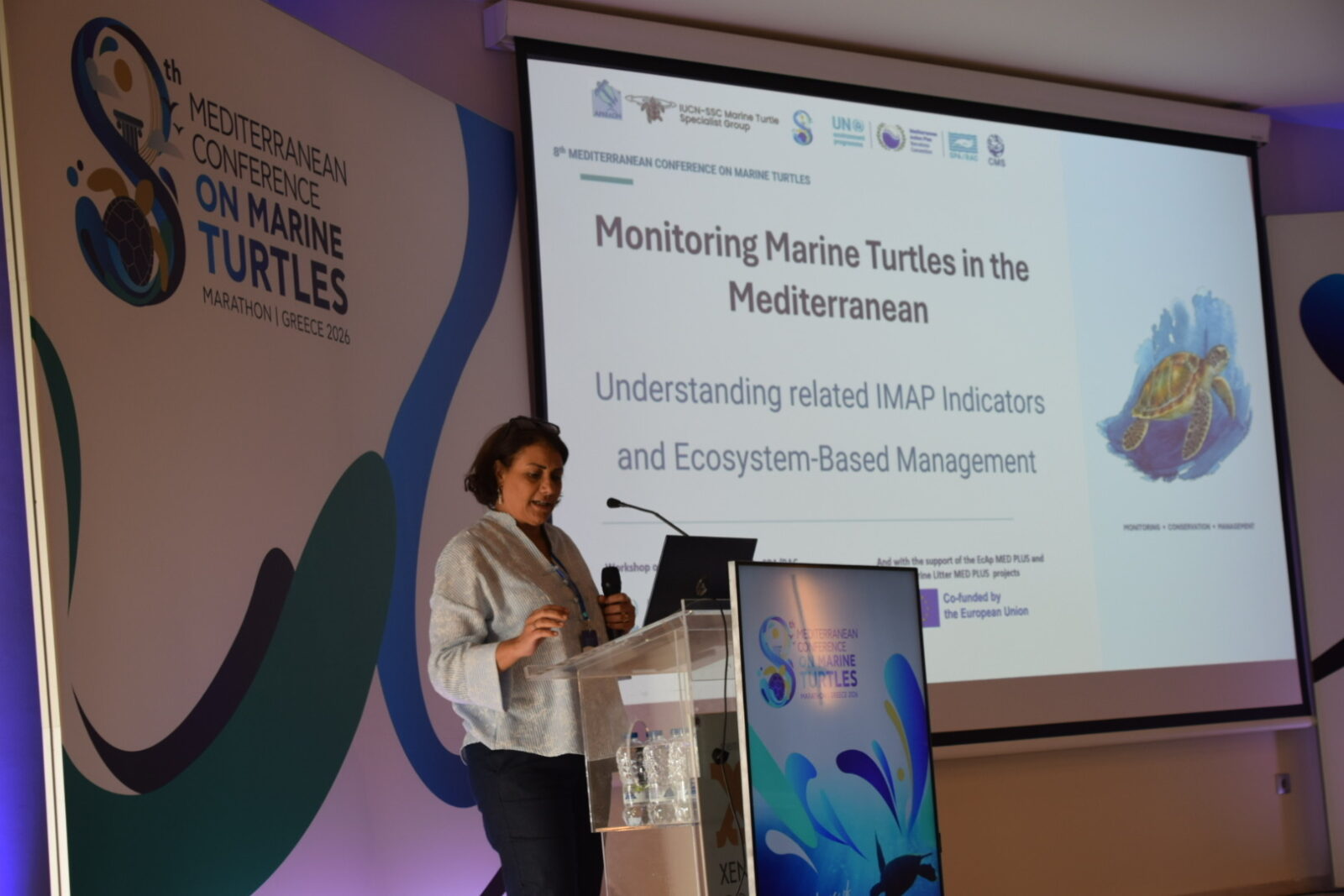
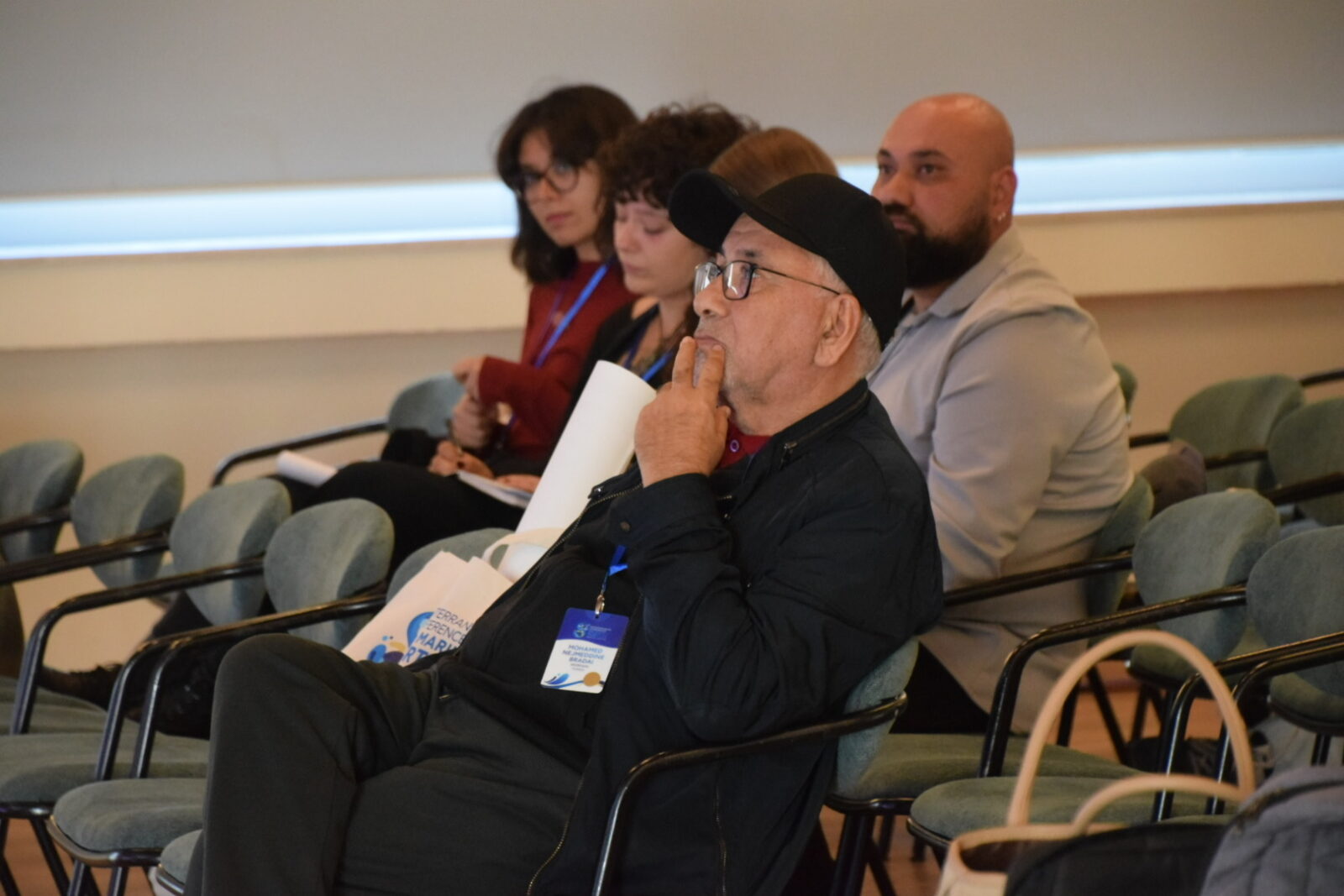
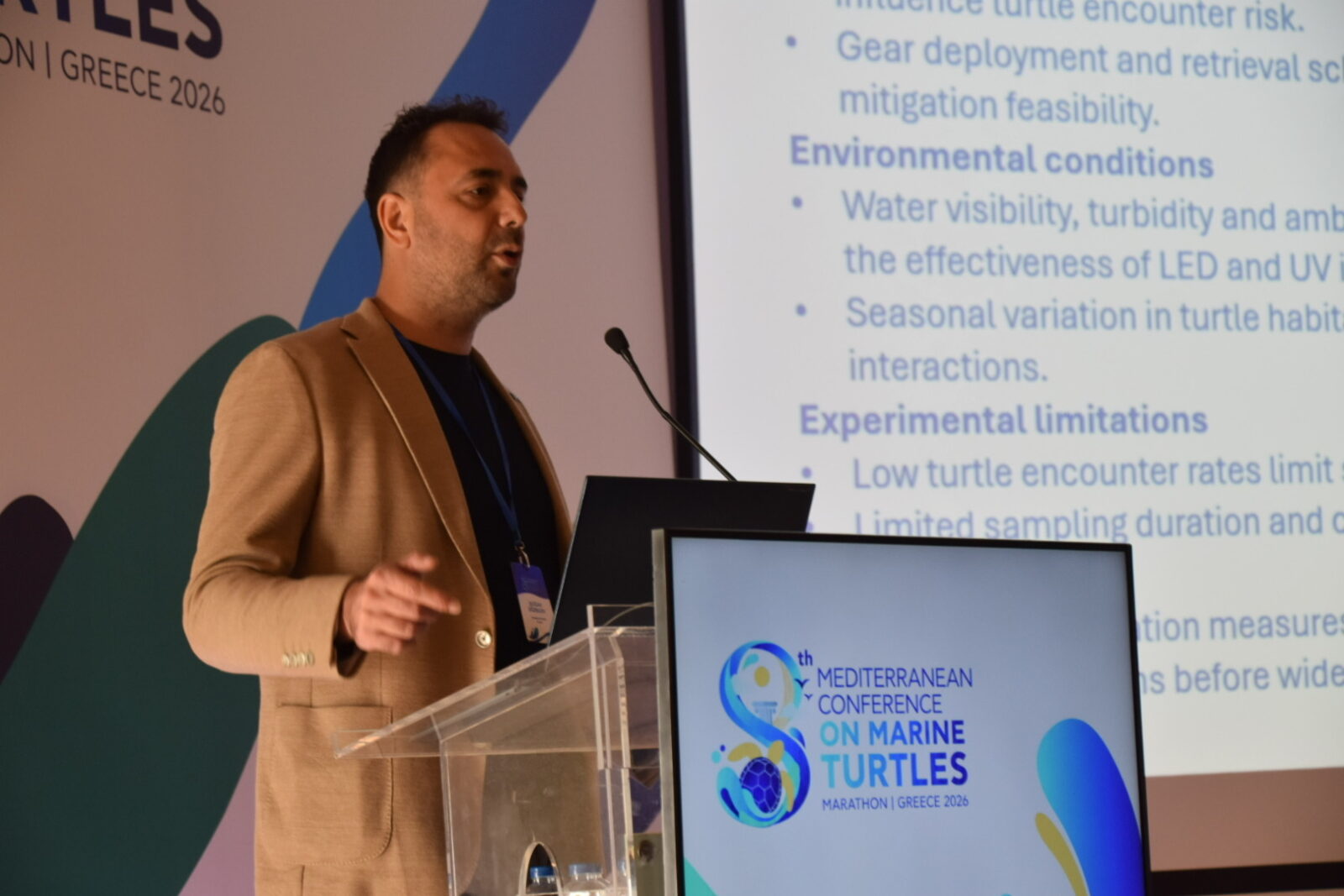
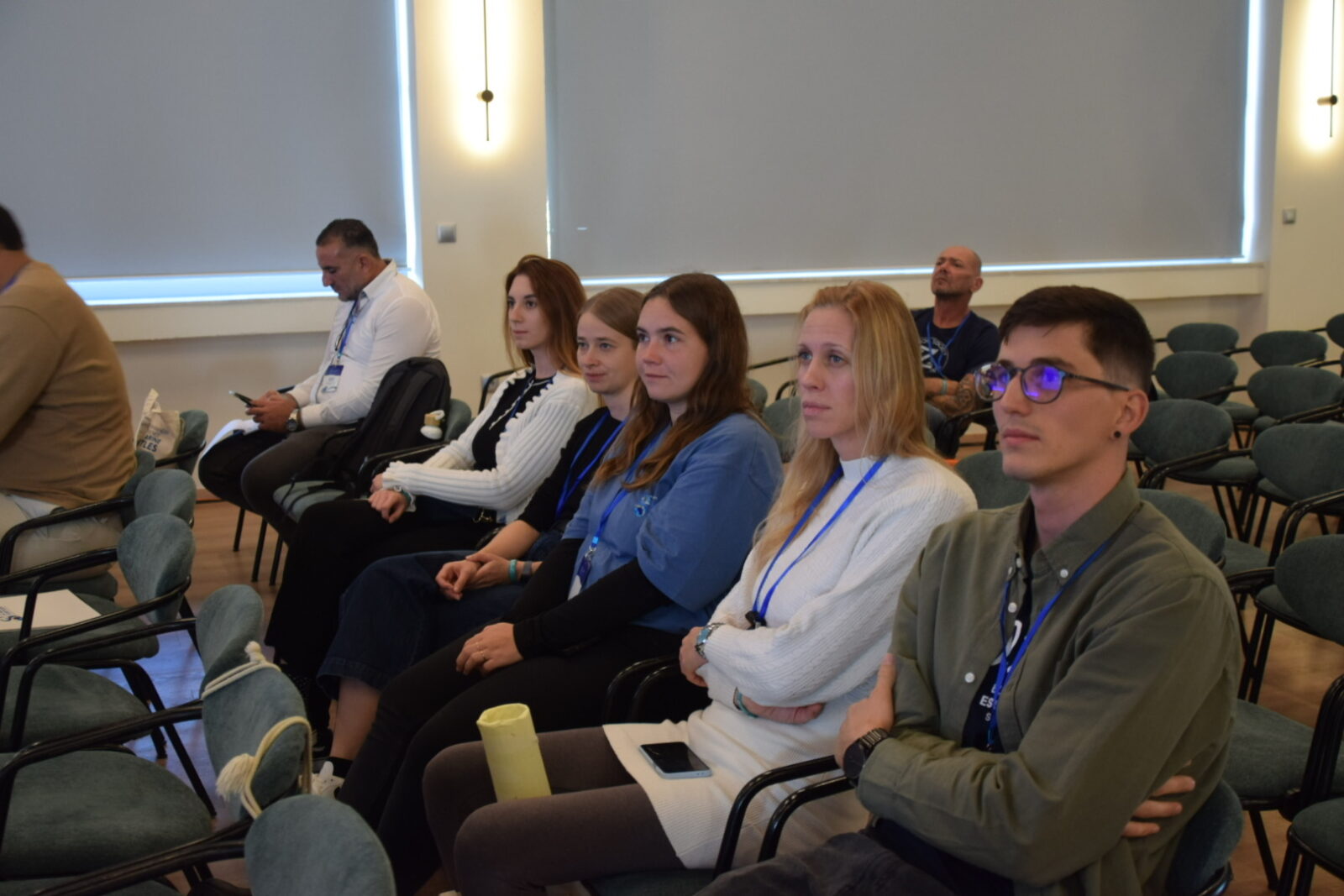
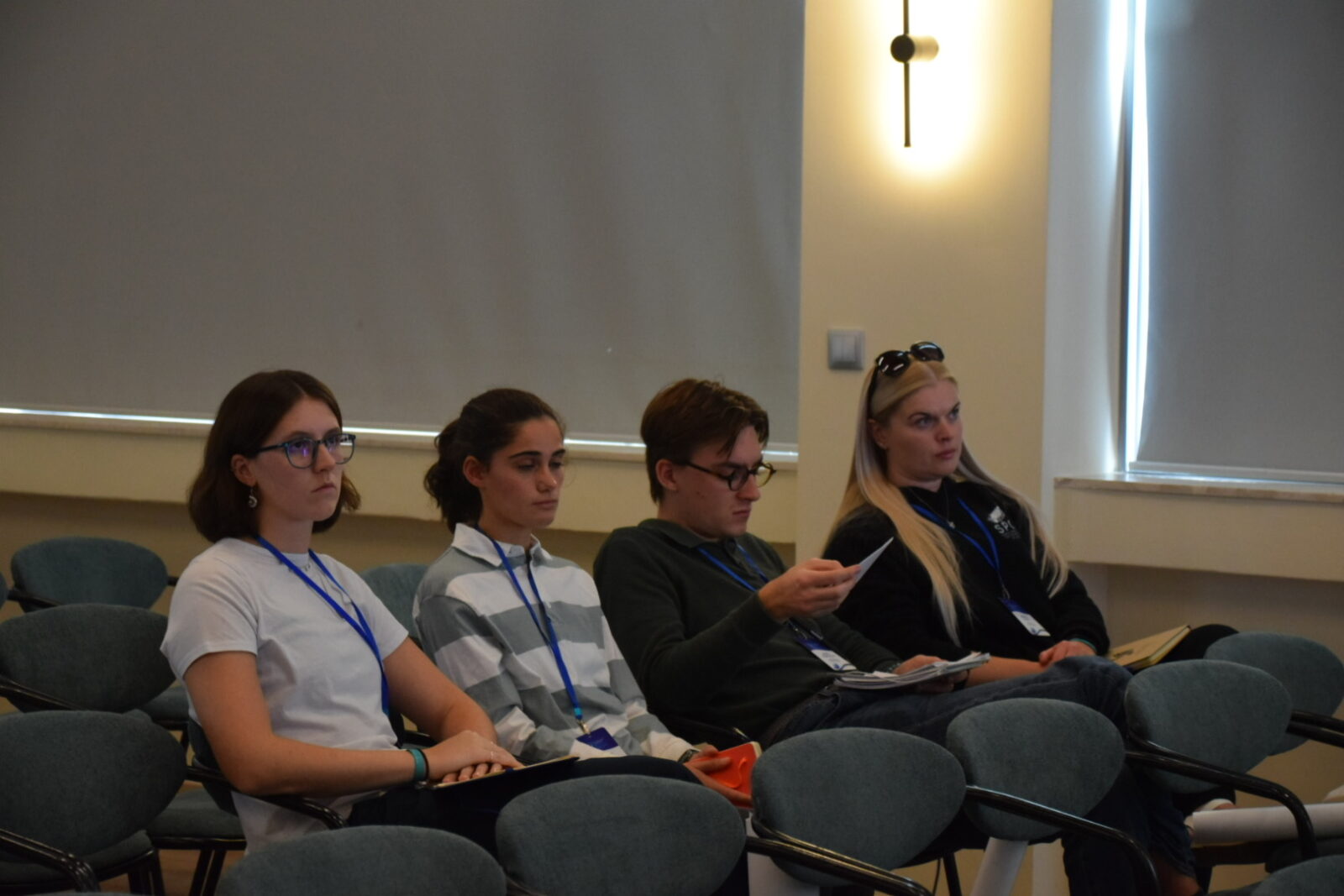
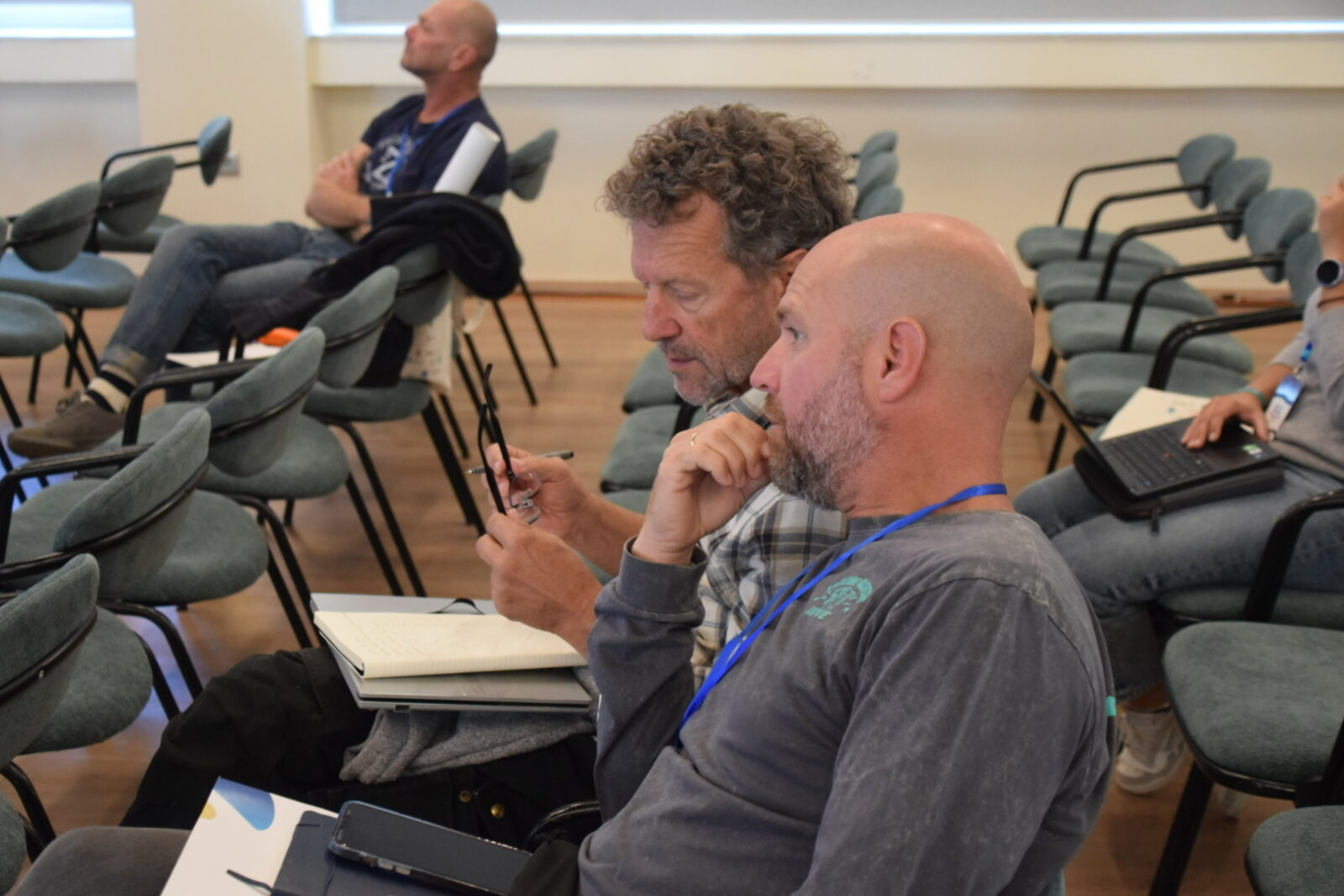
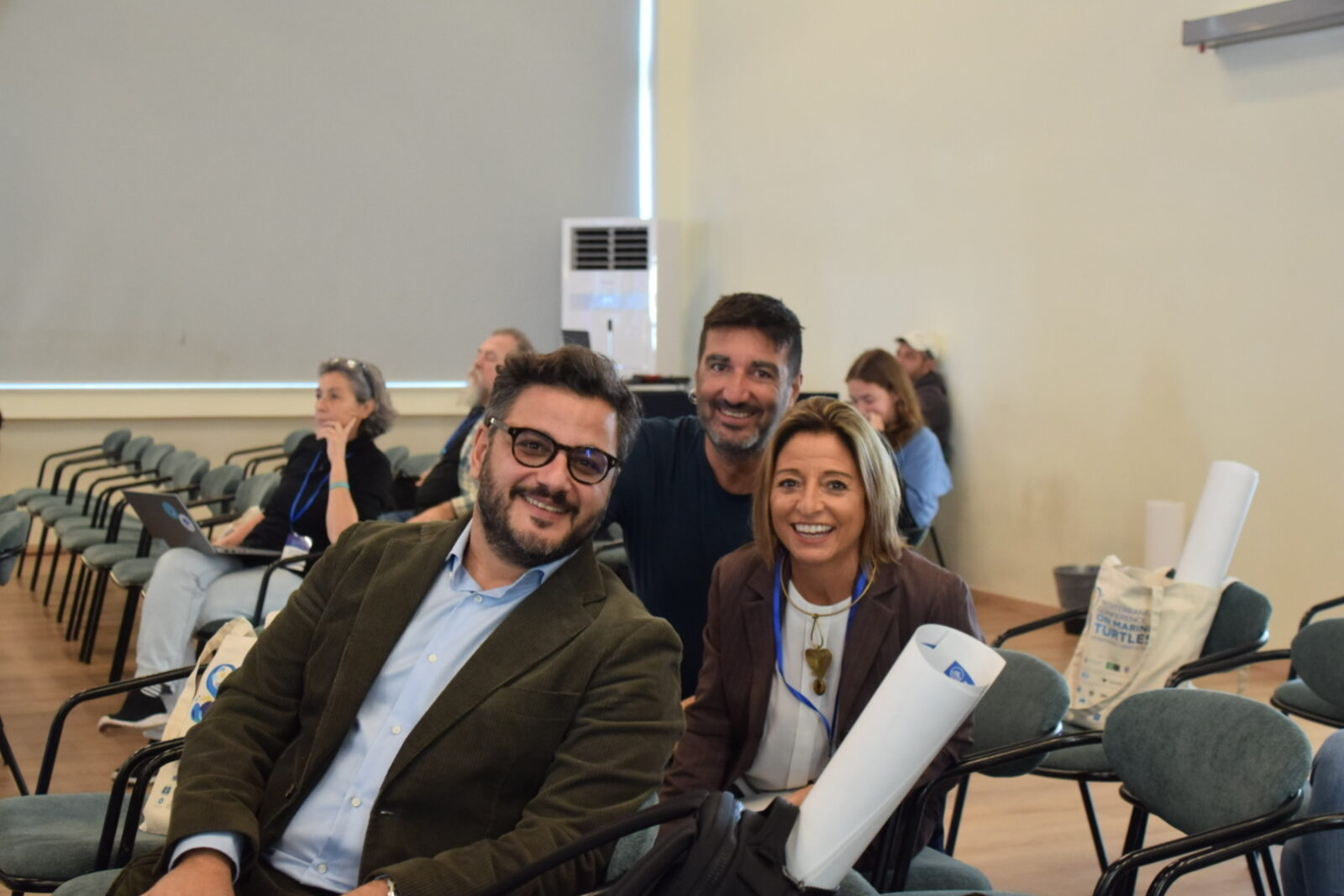
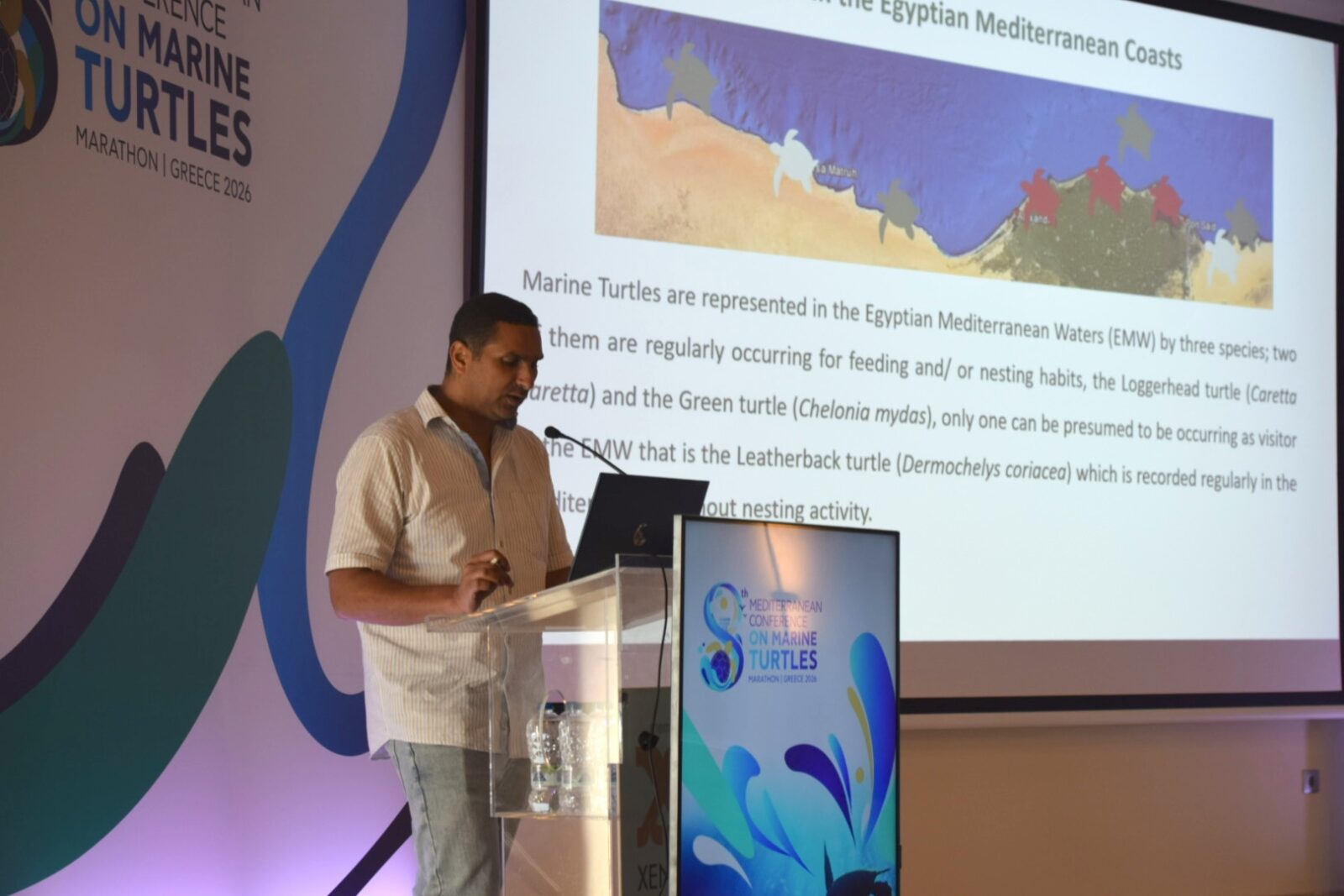
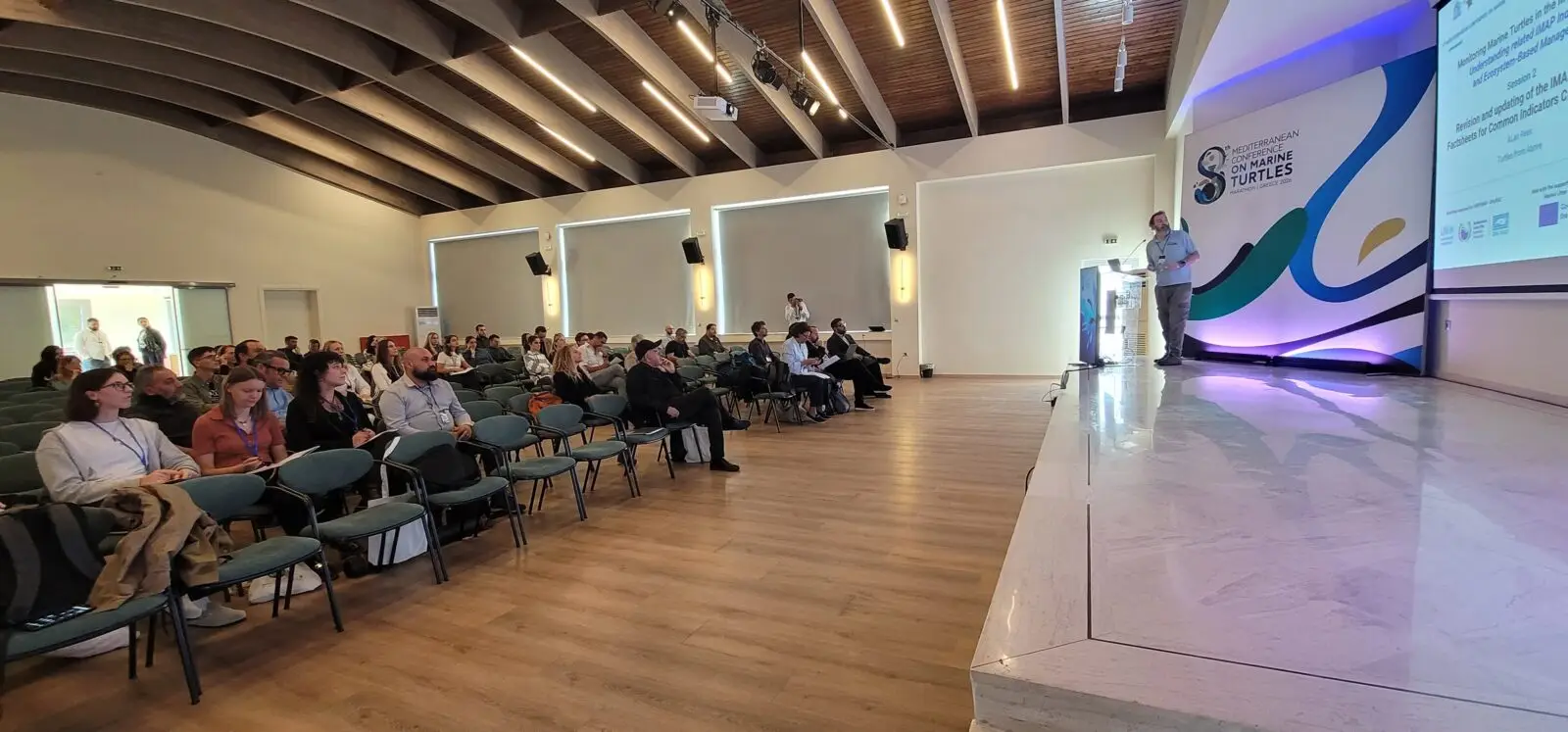
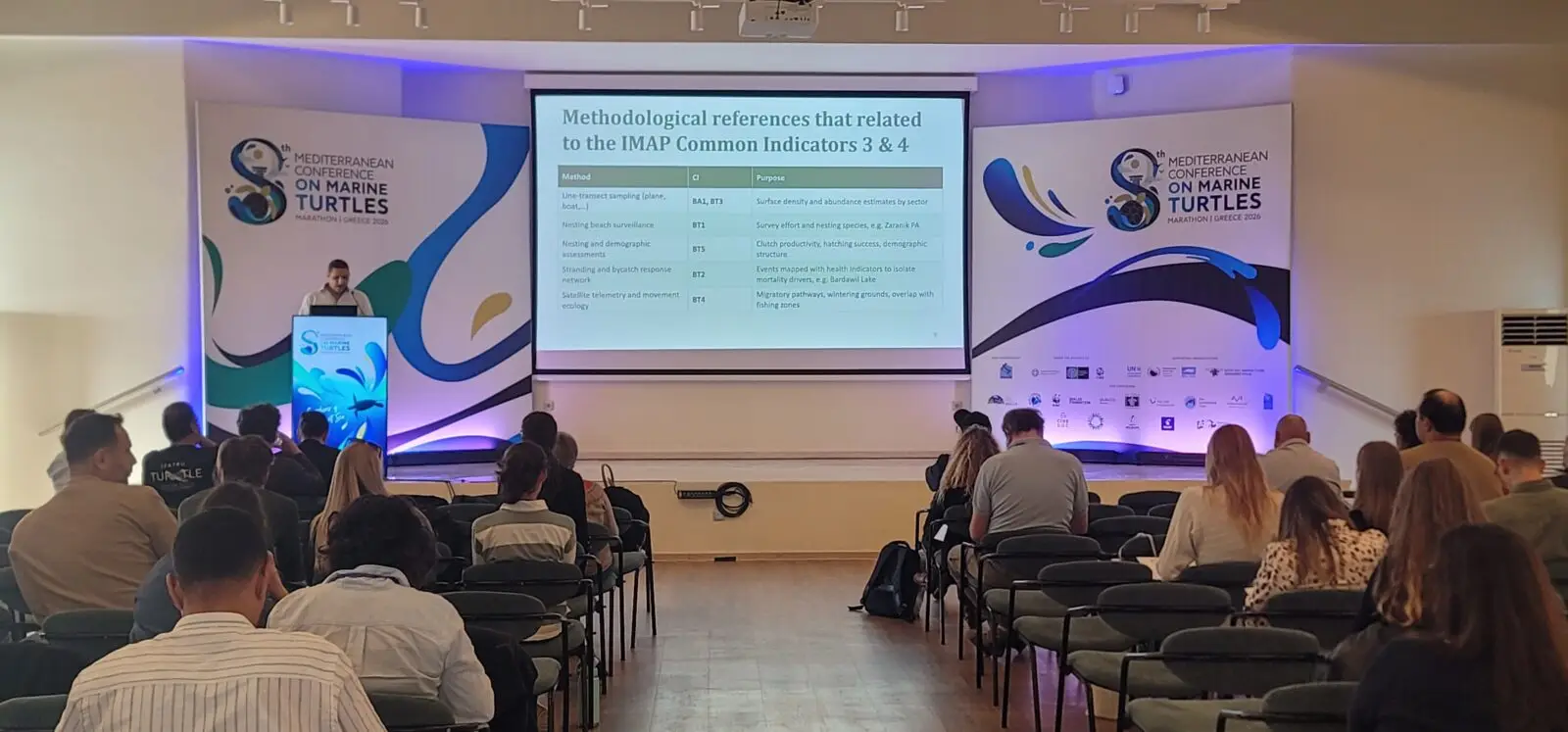
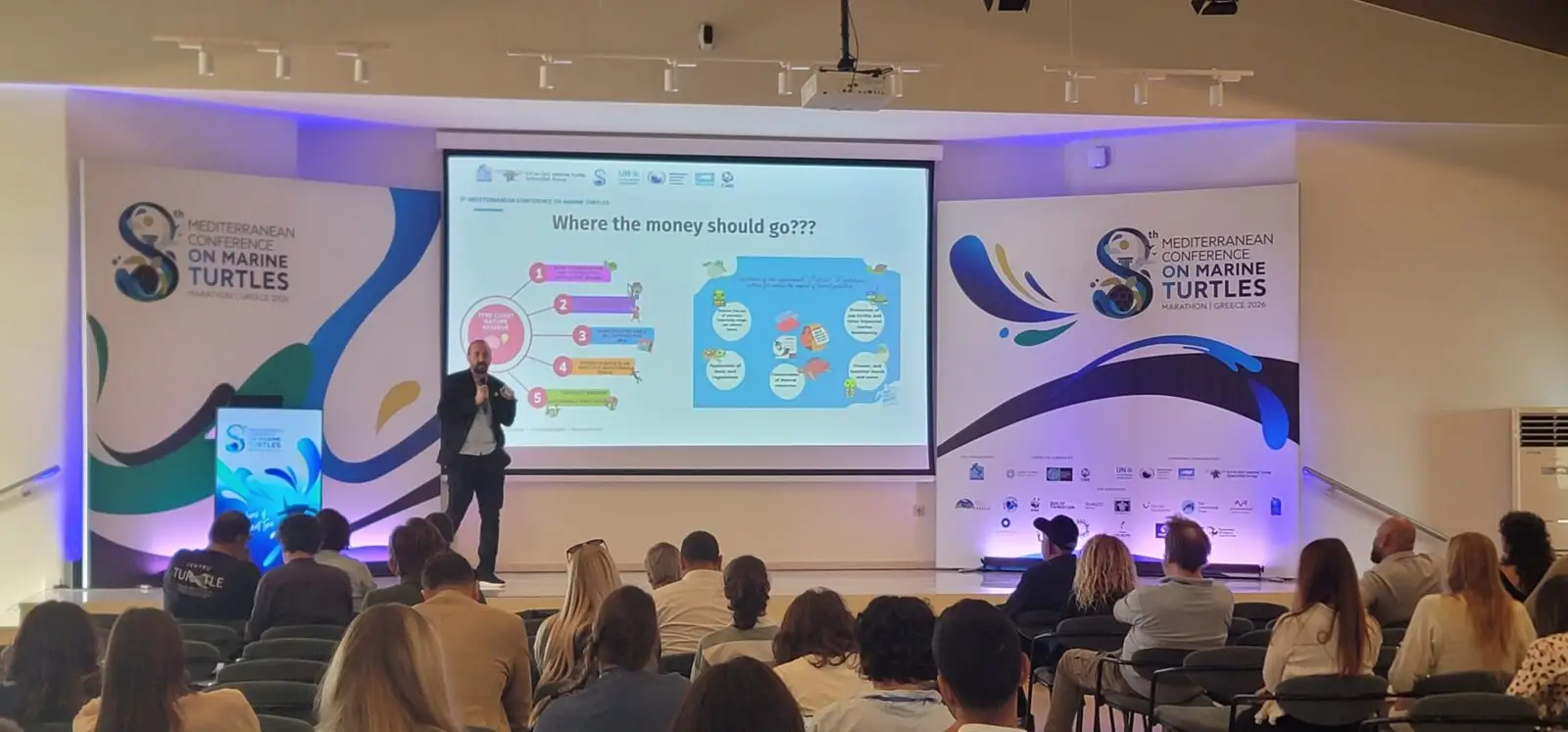
The Specially Protected Areas Regional Activity Centre (UNEP/MAP-SPA/RAC) organized a workshop entitled “Monitoring Marine Turtles in the Mediterranean: Understanding Related IMAP Indicators and Ecosystem-Based Management” as part of the 8th Mediterranean Conference on Marine Turtles, held in Marathon, Greece, from 9 to 13 November 2026.
SPA/RAC also supported the conference through a financial contribution through the Marine turtles MAVA project. The workshop was organized with the support of the EU-funded projects EcAp MED PLUS and Marine Litter MED PLUS.
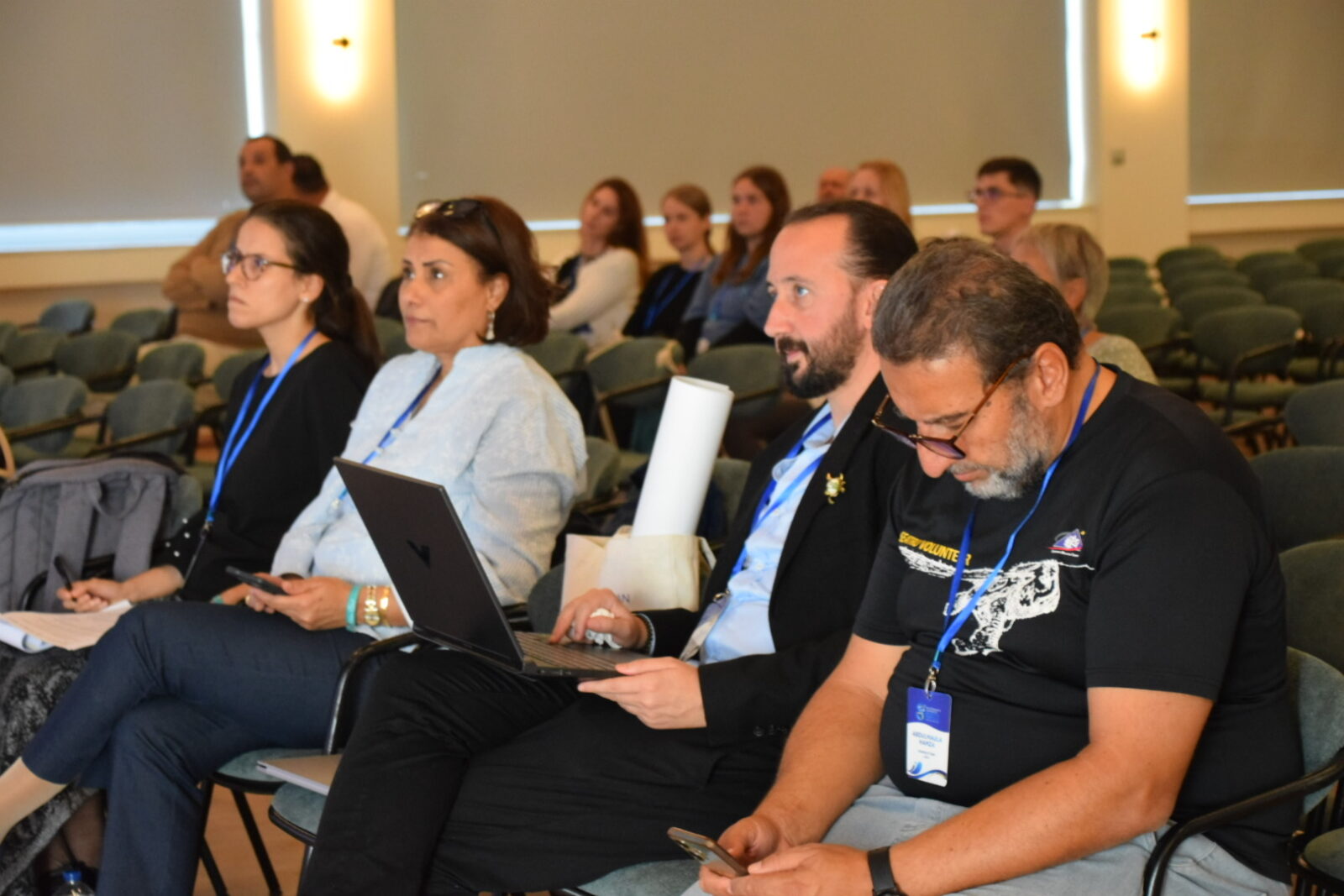
Held on Monday, 9 November 2026, the workshop brought together nearly 70 researchers and conservation practitioners from across the Mediterranean region.
The workshop aimed to strengthen participants’ understanding of marine turtle monitoring within the framework of the Ecosystem Approach (EcAp) and the Integrated Monitoring and Assessment Programme of the Mediterranean Sea and Coast (IMAP). Particular emphasis was placed on the five IMAP Common Indicators relevant to marine turtles:
- CI3 (species distribution),
- CI4 (population abundance),
- CI5 (population demographics),
- CI12 (bycatch of vulnerable and non-target species), and
- CI24 (trends in the amount of litter ingested by or entangling marine turtles).
This initiative forms part of broader efforts to raise awareness and support the implementation of the Ecosystem Approach and its policy framework in the Mediterranean. Discussions also addressed the respective monitoring requirements of these indicators and their contribution to assessing progress towards achieving Good Environmental Status (GES).
The programme featured five thematic sessions covering the Ecosystem Approach and IMAP frameworks, the updated IMAPGuidance Factsheets and harmonized monitoring methodologies for marine turtle monitoring, as well as practical aspects of implementing the monitoring approaches for the five Common Indicators. A concluding session provided an opportunity to discuss common challenges and priorities for strengthening monitoring, data collection and reporting at national and regional levels.
The sessions also provided a platform for experts from France, Libya, Lebanon, Türkiye and Tunisia to share national experiences and practical insights into the implementation of marine turtle monitoring programmes, including progress achieved, challenges encountered and lessons learned. These exchanges contributed to strengthening knowledge exchange and regional cooperation.The presentations and discussions helped foster a shared understanding of IMAP marine turtle indicators and promote harmonized monitoring approaches. It also highlighted the importance of continued regional cooperation and the availability of reliable monitoring data to support the assessment of marine turtle status and conservation efforts in the Mediterranean, particularly in view of the next Mediterranean Quality Status Report (MED QSR), expected in 2031.